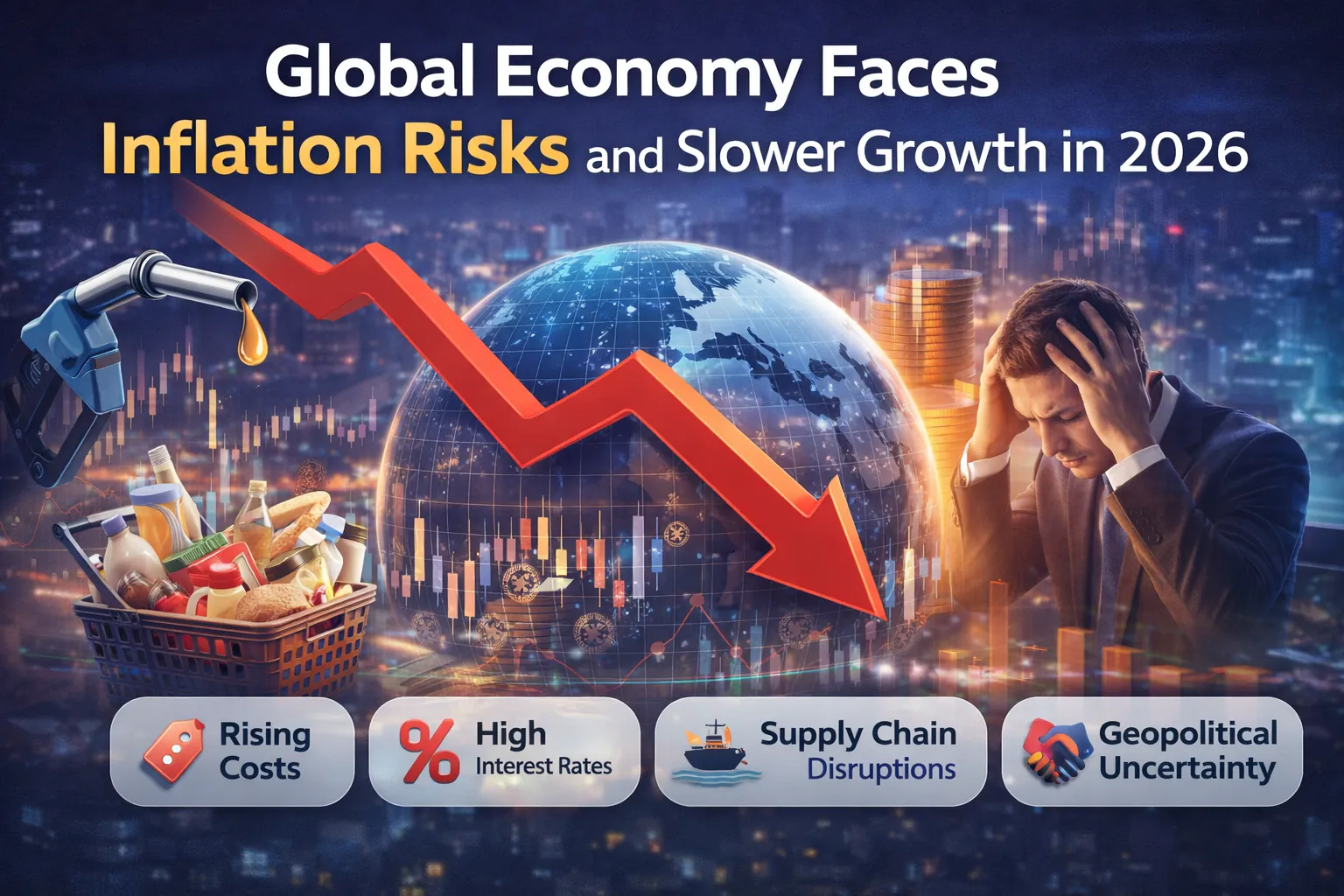
Global Economy Faces Inflation Risks and Slower Growth in 2026
1. Why Inflation Is Still a Major Concern
Inflation remains one of the biggest economic challenges in 2026. Even though price increases have slowed compared to previous years, many essentials — including food, housing, and energy — remain expensive.
Key reasons include:
Higher production and transportation costs
Wage increases across industries
Energy market volatility
Ongoing global supply adjustments
Central banks are carefully balancing interest rates to control inflation without harming economic growth.
2. Slower Global Economic Growth
Economic growth is expected to expand at a slower pace compared to earlier recovery years. Businesses are becoming more cautious with investments and hiring due to uncertain market conditions.
Factors contributing to slower growth:
High borrowing costs
Reduced consumer spending
Trade uncertainties
Technological transitions reshaping industries
While growth continues, it is more moderate and uneven across regions.
3. Impact on Businesses
Companies worldwide are adapting their strategies to survive economic pressure.
Common business responses include:
Increasing operational efficiency
Investing in automation and AI tools
Reducing unnecessary expenses
Diversifying supply chains
Small businesses especially are focusing on digital transformation to stay competitive.
4. How Consumers Are Affected
Consumers are adjusting spending habits due to rising living costs.
Typical changes include:
Prioritizing essential purchases
Increasing savings awareness
Seeking discounts and value-based products
Delaying large investments like homes or vehicles
Financial literacy and budgeting have become more important skills in 2026.
5. Government and Central Bank Actions
Governments and financial institutions are implementing policies to stabilize economies:
Interest rate adjustments
Inflation control programs
Job creation initiatives
Investment in infrastructure and technology
The goal is to achieve sustainable long-term growth while preventing economic downturns.
📈 Opportunities Hidden in Economic Challenges
Despite risks, new opportunities are emerging:
Growth in renewable energy sectors
Expansion of digital services
Remote and global work markets
Innovation-driven startups
Economic slowdowns often encourage innovation and smarter financial decisions.
✅ Key Takeaways for Readers
Inflation remains a global concern in 2026.
Economic growth continues but at a slower rate.
Businesses are focusing on efficiency and technology.
Consumers must adapt smarter financial habits.
Long-term opportunities still exist despite uncertainty.
❓ FAQ (SEO-Friendly)
What causes inflation in 2026?
Inflation is mainly driven by higher production costs, supply chain changes, energy prices, and wage increases across global markets.
Why is economic growth slowing?
Higher interest rates, cautious consumer spending, and global uncertainties are reducing the speed of economic expansion.
Is a recession expected in 2026?
Economists predict slower growth rather than a major global recession, although some regions may face temporary downturns.
How can individuals protect their finances during inflation?
People can focus on budgeting, reducing unnecessary debt, diversifying income sources, and long-term investments.
Which industries may grow despite economic slowdown?
Technology, artificial intelligence, renewable energy, healthcare, and digital services are expected to continue growing.

John Samuelson
Content creator on WritingPay earning through quality content.